
IT Systems Maintenance for Agribusiness Operations
Written By: Luke Ross
Agriculture in the Central Valley has always been defined by hard work, careful planning, and an ability to adapt to changing conditions. Today, technology plays an increasingly important role in that equation. From irrigation management systems and GPS-guided equipment to accounting platforms and supply chain software, agribusiness operations depend on IT infrastructure to stay productive and competitive.
But as technology becomes more central to daily operations, the need for consistent IT systems maintenance grows right alongside it. In this blog, we will explore why proactive maintenance matters for agribusiness, what it looks like in practice, and how the right IT partner can help your operation stay ahead of problems before they disrupt your work.
The Growing Role of Technology in Agribusiness
Modern agribusiness looks very different from the operations of even a decade ago. Precision agriculture tools use sensors, satellite data, and software platforms to help growers make more informed decisions about planting, irrigation, fertilization, and harvest timing. Livestock operations rely on monitoring systems that track animal health and environmental conditions in real time. On the business side, everything from payroll and compliance reporting to vendor management runs through digital platforms.
This reliance on technology means that when systems go down, the impact is felt immediately. A network outage during harvest season can delay shipments, disrupt communication between field crews and office staff, and create costly bottlenecks. A software failure in your accounting system during tax season or audit preparation can set your entire administrative team back by days. For agribusinesses, IT is no longer a back-office concern. It is woven into the fabric of daily operations.
Why Proactive Maintenance Beats Reactive Fixes
Many agribusinesses still operate with a "fix it when it breaks" mentality when it comes to technology. This approach made sense when IT played a smaller role in farming and ranching operations. Today, reactive IT support can be a liability.
When a critical system fails unexpectedly, the costs go beyond the repair itself. There is the lost productivity while your team waits for a fix, the potential for data loss if systems were not properly maintained, and the risk that a small issue has been quietly growing into a larger problem for weeks or months. Reactive fixes also tend to happen at the worst possible times, because systems are most likely to fail when they are under the heaviest load, such as during planting, harvest, or end-of-year reporting.
Proactive IT maintenance flips this script by identifying and addressing potential issues before they cause disruptions. Regular system health checks, software updates, security patches, and performance monitoring all work together to keep your technology running smoothly. Think of it like maintaining your equipment: you would not skip oil changes on a tractor and hope for the best, and your IT systems deserve the same level of care.
What IT Systems Maintenance Looks Like for Agribusiness
IT maintenance for agribusiness operations covers a broad range of activities, each tailored to the unique demands of the industry. Here are the key areas where consistent maintenance makes the biggest difference:
Network Infrastructure
Agribusinesses often operate across multiple locations, including fields, processing facilities, offices, and warehouses. Keeping the network infrastructure that connects these sites running reliably requires regular monitoring, firmware updates, and performance optimization. Connectivity issues between a remote field office and your main headquarters can slow down everything from inventory tracking to payroll processing.
Hardware and Equipment
Servers, workstations, switches, routers, and other hardware all have lifecycles. Proactive maintenance includes monitoring hardware health indicators, replacing aging components before they fail, and ensuring that your hardware and software are compatible with the latest updates and security patches.
Software and Applications
Agricultural operations use a mix of industry-specific software and general business tools. Keeping these applications updated, properly licensed, and configured for optimal performance reduces the risk of crashes, compatibility issues, and security vulnerabilities.
Cybersecurity
Agribusinesses are not immune to cyber threats. In fact, the food and agriculture supply chain has become an increasingly attractive target for cybercriminals. Regular security maintenance, including firewall updates, antivirus management, and user access reviews, helps protect your operation from ransomware, phishing, and other attacks.
Seasonal Considerations for Agribusiness IT
One of the things that makes agribusiness IT unique is the seasonal nature of the work. The demands on your technology shift dramatically throughout the year, and your maintenance schedule should reflect those changes.
During planting and growing seasons, field-based technology like irrigation controllers, weather stations, and GPS systems are under heavy use. This is the time when connectivity and uptime matter most in the field. Pre-season maintenance should include testing all field-based systems, verifying network connections to remote sites, and ensuring that any software used for crop management is updated and functioning properly.
Harvest season places even greater demands on both field and office systems. Processing, logistics, and compliance reporting all ramp up simultaneously, and any technology failure can create a cascading effect. An IT audit before harvest ensures that your systems are ready for the increased workload.
During the off-season, there is an opportunity to perform deeper maintenance activities, such as upgrading aging infrastructure, migrating to new platforms, and conducting comprehensive security assessments. This is also an ideal time for staff training on new tools or updated procedures.
Tips for Building a Strong IT Maintenance Plan
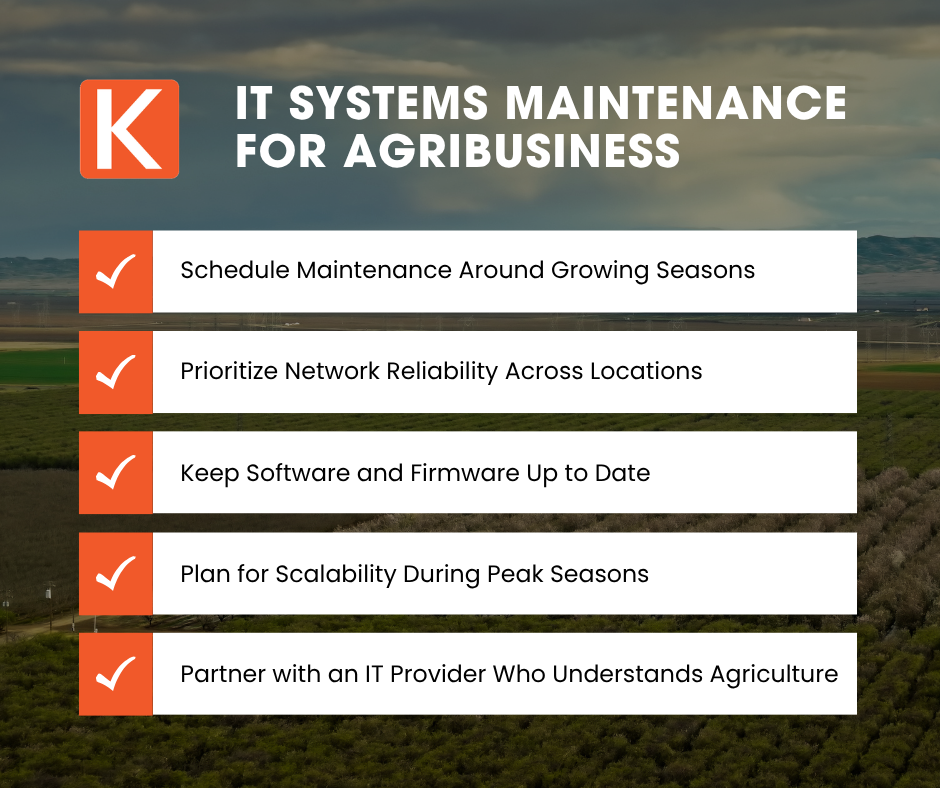
Here are five strategies to help your agribusiness build a reliable IT maintenance routine:
1. Schedule Regular System Health Checks
Set a recurring schedule for reviewing the performance and health of all critical systems. This includes servers, network equipment, workstations, and any specialized agricultural technology. Regular check-ups catch small issues before they become expensive problems.
2. Keep Software and Firmware Current
Outdated software is one of the most common sources of both performance issues and security vulnerabilities. Establish a routine for applying software updates and security patches across all systems, and test updates in a controlled environment before rolling them out to production.
3. Document Your IT Environment
Maintain an up-to-date inventory of all hardware, software, licenses, and network configurations. This documentation makes troubleshooting faster, simplifies planning for upgrades, and ensures that nothing is overlooked during maintenance windows.
4. Train Your Team on Basic IT Hygiene
Your staff does not need to be IT experts, but basic training on topics like password management, recognizing phishing emails, and reporting technical issues promptly can prevent many common problems from escalating.
5. Partner With an IT Provider Who Understands Agriculture
Not every IT provider understands the unique rhythms and challenges of agribusiness. Working with a partner who knows the Central Valley and the agricultural industry ensures that your maintenance plan accounts for seasonal demands, remote locations, and the specialized technology your operation relies on.
These strategies create a foundation for IT reliability that supports your agribusiness through every season.
How Kotman Technology Supports Agribusiness
Since 2005, Kotman Technology has been working alongside Central Valley businesses, including agricultural operations, to keep their technology running at its best. We understand that agribusiness does not follow a nine-to-five schedule, and neither should your IT support. Our team provides proactive monitoring, regular maintenance, and responsive support that fits the way your operation actually works.
Whether you need help optimizing your network across multiple locations, keeping your systems secure against evolving threats, or planning technology upgrades that align with your business goals, we are here to help. Our mission is simple: our team helping your team succeed together.
Conclusion
IT systems maintenance is not a luxury for agribusinesses. It is a practical necessity that protects your investment in technology and keeps your operation running smoothly through every season. By taking a proactive approach and working with an IT partner who understands the demands of agriculture, you can reduce downtime, strengthen security, and focus on what you do best. Contact Kotman Technology to learn how we can help your agribusiness build a maintenance plan that works.
Kotman Technology has been delivering comprehensive technology solutions to clients in California and Michigan for nearly two decades. We pride ourselves on being the last technology partner you'll ever need. Contact us today to experience the Kotman Difference.